
شرینکیج Shrinkage، جمعشدگی یا انقباض پلیمر و پلاستیک
راهنمای کاربردی انقباض پلاستیک و پلیمر در قالبگیری تزریق پلاستیک
نرخ جمعشدگی یا انقباض پلیمر چیست؟
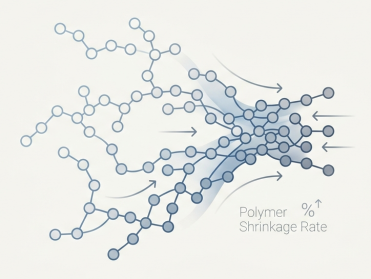
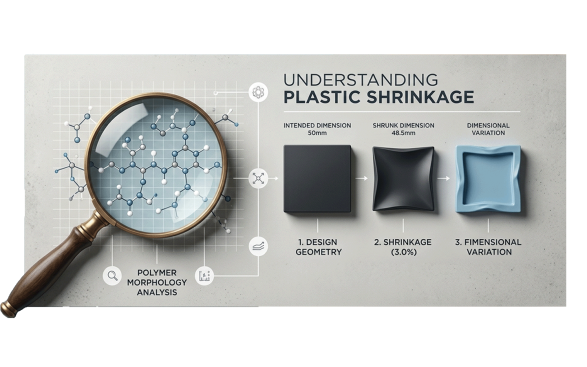
شرینکیج یا انقباض پلیمر به کاهش حجم یا جمعشدگی ماده پلاستیکی پس از سرد شدن و خروج از قالب گفته میشود. این پدیده یکی از مهمترین مباحث در طراحی قالب تزریق پلاستیک است، زیرا میتواند روی ابعاد نهایی قطعه، دقت هندسی و کیفیت سطح آن تأثیر مستقیم بگذارد.
در فرآیند قالبگیری تزریقی، مذاب پلیمر پس از پر کردن حفره قالب شروع به سرد شدن میکند. در این مرحله، پلیمر به دلیل تغییر چگالی و ساختار مولکولی، بهصورت طبیعی منقبض میشود. میزان این انقباض را “نرخ شرینکیج” مینامند.
چرا شناخت شرینکیج پلاستیک اهمیت دارد؟
انقباض یا شرینکیج پلیمر یک رفتار طبیعی است، اما اگر در طراحی قالب در نظر گرفته نشود، مشکلات زیر ایجاد میشود:
اختلاف ابعادی بین قطعه نهایی و طراحی اولیه
گیرکردن یا تاببرداشتن (Warping) قطعه
کاهش کیفیت سطح
مشکل در مونتاژ قطعات
رد شدن قطعه در کنترل کیفیت
به همین دلیل در صنعت قالبسازی، مهندسان همواره قبل از ساخت قالب، تحلیل شرینکیج را انجام میدهند تا تلرانسهای لازم بهدرستی اعمال شود.
۱. شرینکیج اولیه (Primary Shrinkage)
انقباض مستقیم بعد از سرد شدن پلیمر داخل قالب.
۲. شرینکیج ثانویه (Post-Molding Shrinkage)
انقباض پس از خروج قطعه از قالب که در ساعات یا حتی روزهای بعد رخ میدهد.
پلیمرهای نیمهکریستالی بیشترین شرینکیج ثانویه را دارند.
۳. شرینکیج جهتدار (Directional Shrinkage)
وابسته به جهت جریان مذاب و جهتگیری زنجیرههای پلیمری.
انواع شرینکیج در قالبگیری تزریق پلاستیک
انقباض پلیمر چگونه در طراحی قالب جبران میشود؟
در طراحی قالبهای صنعتی، مهندسان باید انقباض یا شرینکیج را از قبل پیشبینی کنند. برخی روشهای جبران عبارتاند از:
افزودن Allowance یا ضریب انقباض
ابعاد حفره قالب کمی بزرگتر از ابعاد نهایی قطعه طراحی میشود.
استفاده از نرمافزارهای تحلیل CAE
نرمافزارهایی مثل Moldflow میزان Shrinkage و Warpage را محاسبه کرده و بهترین سیستم تزریق و خنککاری را پیشنهاد میدهند.
کنترل دمای قالب و تنظیمات تزریق
تنظیم دمای قالب، فشار تزریق و زمان نگهدارنده، نقش مهمی در کنترل شرینکیج دارد.
بهبود طراحی قطعه
یونیفورمکردن ضخامت و حذف تمرکز تنشها به کاهش جمعشدگی کمک میکند
پس از شناخت انواع شرینکیج و نقش آن در رفتار ابعادی قطعات تزریقی، قدم بعدی دسترسی به دادههای استاندارد و قابل اعتماد از نرخ انقباض پلیمرهاست. بسیاری از خطاهای رایجی که در مرحله نمونهگیری قالب دیده میشود، مستقیماً ناشی از استفاده از اطلاعات ناقص یا تخمینی درباره Shrinkage مواد هستند.
در همین راستا، گروه صنعتی دیاکو با تکیه بر تجربه عملی و دانش مهندسی خود، جدول جامعی از نرخ شرینکیج انواع پلیمرهای صنعتی را تدوین کرده و بهصورت رایگان در اختیار شما تولید کنندگان عزیز قرار میدهد.
این مرجع کاربردی به طراحان کمک میکند تا تصمیمات ابعادی و انتخاب مواد را با دقت علمی بالاتر انجام دهند.
برای استفاده از این مرجع، کافی است جدول جامع نرخ شرینکیج را دانلود کرده و در طراحیهای خود به کار گیرید.در صورت نیاز به تحلیلهای تخصصیتر، مشاوره در خصوص رفتار مواد پلیمری و یا سفارش قالب تزریق پلاستیک با دقت بالا، تیم مهندسی دیاکو با افتخار در کنار شما خواهد بود.

جدول آنلاین نرخ جمع شدگی یا انقباض(Shrinkage) پلیمر و پلاستیک
جهت استفاده راحتتر، در قسمت جستجو نام پلیمر مورد نظر را جستجو کنید.
| نام پلیمر | نام دقیق پلیمر | حداقل(٪) | حداکثر(٪) |
|---|---|---|---|
| ABS | Acrylonitrile-Butadiene Styrene | 0.7 | 1.6 |
| ABS FR | Acrylonitrile-Butadiene Styrene flame retardant | 0.3 | 0.8 |
| ABS High Heat | Acrylonitrile-Butadiene Styrene High Heat | 0.4 | 0.9 |
| ABS High Impact | Acrylonitrile-Butadiene Styrene High Impact | 0.4 | 0.9 |
| ABS/PC | Acrylonitrile-Butadiene Styrene/Polycarbonate | 0.5 | 0.7 |
| ABS/PC 20% GF | Acrylonitrile-Butadiene Styrene/Polycarbonate 20% glass fiber | 0.2 | 0.3 |
| ABS/PC FR | Acrylonitrile-Butadiene Styrene/Polycarbonate flame retardant | 0.3 | 0.6 |
| Amorphous TPI Blend, Ultra-high heat, Chemical Resistant (High Flow) | Amorphous TPI Blend, Ultra-high heat, Chemical Resistant (High Flow) | 0.8 | 1 |
| Amorphous TPI Blend, Ultra-high heat, Chemical Resistant (Standard Flow) | Amorphous TPI Blend, Ultra-high heat, Chemical Resistant (Standard Flow) | 0.8 | 1 |
| Amorphous TPI, High Heat, High Flow, Transparent, Lead-Free Solderable (High Flow) | Amorphous TPI, High Heat, High Flow, Transparent, Lead-Free Solderable (High Flow) | 1 | 1.2 |
| Amorphous TPI, High Heat, High Flow, Transparent, Lead-Free Solderable (Standard Flow) | Amorphous TPI, High Heat, High Flow, Transparent, Lead-Free Solderable (Standard Flow) | 1 | 1.2 |
| Amorphous TPI, Moderate Heat, Transparent | Amorphous TPI, Moderate Heat, Transparent | 0.5 | 0.7 |
| Amorphous TPI, Moderate Heat, Transparent (Food Contact Approved) | Amorphous TPI, Moderate Heat, Transparent (Food Contact Approved) | 0.5 | 0.7 |
| Amorphous TPI, Moderate Heat, Transparent (Mold Release grade) | Amorphous TPI, Moderate Heat, Transparent (Mold Release grade) | 0.5 | 0.7 |
| Amorphous TPI, Moderate Heat, Transparent (Powder form) | Amorphous TPI, Moderate Heat, Transparent (Powder form) | 0.5 | 0.7 |
| ASA | Acrylonitrile Styrene Acrylate | 0.4 | 0.7 |
| ASA/PC | Acrylonitrile Styrene Acrylate/Polycarbonate | 0.3 | 0.7 |
| ASA/PC FR | Acrylonitrile Styrene Acrylate/Polycarbonate flame retardant | 0.4 | 0.8 |
| ASA/PVC | Acrylonitrile Styrene Acrylate/Polyvinyl Chloride | 0.3 | 0.7 |
| CA – Cellulose Acetate | Cellulose Acetate | 0.3 | 1 |
| CAB – Cellulose Acetate Butyrate | Cellulose Acetate Butyrate | 0.2 | 0.9 |
| Celllulose Diacetate- Pearlescent Films | Celllulose Diacetate- Pearlescent Films | 1 | 1.5 |
| Celllulose Diacetate-Matt Film | Celllulose Diacetate-Matt Film | 1 | 1.5 |
| CP – Cellulose Proprionate | Cellulose Proprionate | 0.1 | 0.9 |
| CPVC – Chlorinated Polyvinyl Chloride | CPVC – Chlorinated Polyvinyl Chloride | 0.3 | 0.7 |
| ETFE | Ethylene Tetrafluoroethylene | 3 | 4 |
| EVA | Ethylene Vinyl Acetate | 0.4 | 3.5 |
| FEP | Fluorinated Ethylene Propylene | 3 | 6 |
| HDPE – High Density Polyethylene | HDPE – High Density Polyethylene | 1.5 | 4 |
| HIPS – High Impact Polystyrene | HIPS – High Impact Polystyrene | 0.2 | 0.8 |
| HIPS FR V0 | High Impact Polystyrene flame retardant V0 | 0.3 | 0.6 |
| LCP | Liquid Crystal Polymer | 0.1 | 0.6 |
| LCP CF | Liquid Crystal Polymer carbon fiber | 0.1 | 0.5 |
| LCP GF | Liquid Crystal Polymer glass fiber | 0.1 | 0.4 |
| LCP MINERAL | Liquid Crystal Polymer mineral | 0.1 | 0.5 |
| LDPE – Low Density Polyethylene | LDPE – Low Density Polyethylene | 2 | 4 |
| LLDPE – Linear Low Density Polyethylene | LLDPE – Linear Low Density Polyethylene | 2 | 2.5 |
| MABS | Transparent Acrylonitrile Butadiene Styrene | 0.4 | 0.7 |
| PA 11 30% Glass fiber reinforced | Polyamide 11 30% Glass fiber reinforced | 0.5 | 0.5 |
| PA 11 conductive | Polyamide 11 conductive | 0.7 | 2 |
| PA 11 flexible | Polyamide 11 flexible | 1.4 | 1.8 |
| PA 11 rigid | Polyamide 11 rigid | 0.7 | 2 |
| PA 12 conductive | Polyamide 12 conductive | 0.7 | 2 |
| PA 12 fiber reinforced | Polyamide 12 fiber reinforced | 0.7 | 2 |
| PA 12 flexible | Polyamide 12 flexible | 0.7 | 2 |
| PA 12 glass filled | Polyamide 12 glass filled | 0.7 | 2 |
| PA 12 rigid | Polyamide 12 rigid | 0.7 | 2 |
| PA 46 | Polyamide 46 | 1.5 | 2 |
| PA 46 30% GF | Polyamide 46 30% glass fiber | 0.3 | 1.3 |
| PA 6 | Polyamide 6 | 0.5 | 1.5 |
| PA 6-10 | Polyamide 6-10 | 1 | 1.3 |
| PA 66 | Polyamide 6-6 | 0.7 | 3 |
| PA 66 30% GF | Polyamide 6-6 30% glass fiber | 0.5 | 0.5 |
| PA 66 30% mineral filled | Polyamide 6-6 30% mineral filled | 0.6 | 1 |
| PA 66 IM 15-30% GF | Polyamide 6-6 impact modified 15-30% glass fiber | 0.2 | 0.6 |
| PA 66 impact modified | Polyamide 6-6 impact modified | 1.2 | 3 |
| PAI | Polyamide-Imide | 0.6 | 1 |
| PAI 30% GF | Polyamide-Imide 30% glass fiber | 0.1 | 0.3 |
| PAI low friction | Polyamide-Imide low friction | 0.1 | 0.5 |
| PAN | Polyacrylonitrile | 0.2 | 0.5 |
| PAR | Polyarylate | 0.9 | 1.2 |
| PARA 30-60% GF | Polyarylamide 30-60% glass fiber | 0.1 | 0.4 |
| PBT | Polybutylene Terephthalate | 0.5 | 2.2 |
| PBT 30% GF | Polybutylene Terephthalate 30% glass fiber | 0.2 | 1 |
| PC 20-40% GF | Polycarbonate 20-40% glass fiber | 0.1 | 0.5 |
| PC 20-40% GF FR | Polycarbonate 20-40% glass fiber flame retardant | 0.1 | 0.5 |
| PC high heat | Polycarbonate high heat | 0.7 | 1 |
| PC/PBT | Polycarbonate/Polybutylene Terephthalate blend | 0.6 | 1.1 |
| PCTFE | Polymonochlorotrifluoroethylene | 0.5 | 1.5 |
| PE 30% GF | Polyethylene 30% glass fiber | 0.2 | 0.6 |
| PEEK | Polyetheretherketone | 1.2 | 1.5 |
| PEEK 30% CF | Polyetheretherketone 30% carbon fiber | 0.5 | |
| PEEK 30% GF | Polyetheretherketone 30% glass fiber | 0.4 | 0.8 |
| PEI | Polyetherimide | 0.7 | 0.8 |
| PEI 30% GF | Polyetherimide 30% glass fiber | 0.2 | 0.4 |
| PEI mineral filled | Polyetherimide mineral filled | 0.5 | 0.7 |
| PEKK– Low cristallinity grade | Polyetherketoneketone– Low cristallinity grade | 0.004 | 0.005 |
| PESU | Polyethersulfone | 0.6 | 0.7 |
| PESU 10-30% GF | Polyethersulfone 10-30% glass fiber | 0.2 | 0.3 |
| PET | Polyethylene Terephtalate | 0.2 | 3 |
| PET 30% GF | Polyethylene Terephtalate 30% glass fiber | 0.2 | 1 |
| PET 30/35% GF Impact modified | Polyethylene Terephtalate 30/35% glass fiber impact modified | 0.2 | 0.9 |
| PET G | Polyethylene Terephtalate Glycol | 0.2 | 1 |
| PE-UHMW | Polyethylene -Ultra High Molecular Weight | 4 | 4 |
| PFA | Perfluoroalkoxy | 3 | 5 |
| PHB – Polyhydroxybutyrate | Polyhydroxybutyrate | 1.2 | 1.6 |
| PI | Polyimide | 0.2 | 1.2 |
| PLA-injection molding | Polylactide-injection molding | 0.3 | 0.5 |
| PMMA | Polymethylmethacrylate (Acrylic) | 0.2 | 0.8 |
| PMMA high heat | Polymethylmethacrylate (Acrylic) high heat | 0.2 | 0.8 |
| PMMA Impact modified | Polymethylmethacrylate (Acrylic) impact modified | 0.2 | 0.8 |
| PMP | Polymethylpentene | 1.6 | 2.1 |
| PMP 30% GF | Polymethylpentene 30% glass fiber | 0.3 | 1.2 |
| PMP mineral filled | Polymethylpentene mineral filled | 1.4 | 1.7 |
| Polyamide 66 (Nylon 66)/Carbon Fiber, Long, 30 % Filler by Weight | Polyamide 66 (Nylon 66)/Carbon Fiber, Long, 30 % Filler by Weight | 0.3 | 0.3 |
| Polyamide 66 (Nylon 66)/Carbon Fiber, Long, 40 % Filler by Weight | Polyamide 66 (Nylon 66)/Carbon Fiber, Long, 40 % Filler by Weight | 0.3 | 0.3 |
| Polyamide 66 (Nylon 66)/Glass Fiber, Long, 40 % Filler by Weight | Polyamide 66 (Nylon 66)/Glass Fiber, Long, 40 % Filler by Weight | 0.3 | 0.3 |
| Polyamide 66 (Nylon 66)/Glass Fiber, Long, 40 % Filler by Weight | Polyamide 66 (Nylon 66)/Glass Fiber, Long, 40 % Filler by Weight | 0.3 | 0.3 |
| Polyamide 66 (Nylon 66)/Glass Fiber, Long, 50 % Filler by Weight | Polyamide 66 (Nylon 66)/Glass Fiber, Long, 50 % Filler by Weight | 0.3 | 0.3 |
| Polyamide 66 (Nylon 66)/Glass Fiber, Long, 50 % Filler by Weight | Polyamide 66 (Nylon 66)/Glass Fiber, Long, 50 % Filler by Weight | 0.3 | 0.3 |
| Polyamide 66 (Nylon 66)/Glass Fiber, Long, 60 % Filler by Weight | Polyamide 66 (Nylon 66)/Glass Fiber, Long, 60 % Filler by Weight | 0.3 | 0.3 |
| Polyamide 66 (Nylon 66)/Glass Fiber, Long, 60 % Filler by Weight | Polyamide 66 (Nylon 66)/Glass Fiber, Long, 60 % Filler by Weight | 0.3 | 0.3 |
| Polypropylene Homopolymer (PP Homopolymer)/Glass Fiber, Long, 30 % Filler by Weight | Polypropylene Homopolymer (PP Homopolymer)/Glass Fiber, Long, 30 % Filler by Weight | 0.4 | 0.4 |
| Polypropylene Homopolymer (PP Homopolymer)/Glass Fiber, Long, 40 % Filler by Weight | Polypropylene Homopolymer (PP Homopolymer)/Glass Fiber, Long, 40 % Filler by Weight | 0.3 | 0.3 |
| Polypropylene Homopolymer (PP Homopolymer)/Glass Fiber, Long, 40 % Filler by Weight | Polypropylene Homopolymer (PP Homopolymer)/Glass Fiber, Long, 40 % Filler by Weight | 0.3 | 0.3 |
| Polypropylene Homopolymer (PP Homopolymer)/Glass Fiber, Long, 50 % Filler by Weight | Polypropylene Homopolymer (PP Homopolymer)/Glass Fiber, Long, 50 % Filler by Weight | 0.3 | 0.3 |
| Polypropylene Homopolymer (PP Homopolymer)/Glass Fiber, Long, 50 % Filler by Weight | Polypropylene Homopolymer (PP Homopolymer)/Glass Fiber, Long, 50 % Filler by Weight | 0.3 | 0.3 |
| POM | Polyoxymethylene (acetal) | 1.8 | 2.5 |
| POM impact modified | Polyoxymethylene (acetal) impact modified | 1 | 2.5 |
| POM low friction | Polyoxymethylene (acetal) low friction | 1.8 | 3 |
| POM mineral filled | Polyoxymethylene (acetal) mineral filled | 1.5 | 2 |
| PP 10-20% GF | Polypropylene 10-20% glass fiber | 0.3 | 1 |
| PP 10-40% mineral filled | Polypropylene 10-40% mineral filled | 0.6 | 1.4 |
| PP 10-40% TALC | Polypropylene 10-40% talc | 0.9 | 1.4 |
| PP 30-40% GF | Polypropylene 30-40% glass fiber | 0.1 | 1 |
| PP copo | Polypropylene copolymer | 2 | 3 |
| PP homo | Polypropylene homopolymer | 1 | 3 |
| PP impact modified | Polypropylene impact modified | 2 | 3 |
| PPA | Polyphthalamide | 1.5 | 2.2 |
| PPA – 30% mineral | Polyphthalamide– 30% mineral | 1 | 1.2 |
| PPA – 33% glass fiber | Polyphthalamide – 33% glass fiber | 0.5 | 0.7 |
| PPA – 33% glass fiber – high flow | Polyphthalamide– 33% glass fiber – high flow | 0.74 | 0.76 |
| PPA – 45% glass fiber | Polyphthalamide– 45% glass fiber | 0.1 | 0.3 |
| PPE | Polyphenylene Ether | 0.5 | 0.8 |
| PPE 30% GF | Polyphenylene Ether 30% glass fiber | 0.1 | 0.4 |
| PPE FR | Polyphenylene Ether flame retardant | 0.6 | 1 |
| PPE impact modified | Polyphenylene Ether impact modified | 0.6 | 1 |
| PPE mineral filled | Polyphenylene Ether mineral filled | 0.3 | 0.7 |
| PPS | Polyphenylene Sulfide | 0.6 | 1.4 |
| PPS 20-30% GF | Polyphenylene Sulfide 20-30% glass fiber | 0.2 | 0.5 |
| PPS 40% GF | Polyphenylene Sulfide 40% glass fiber | 0.2 | 0.5 |
| PPS conductive | Polyphenylene Sulfide conductive | 0.3 | 1 |
| PPS GF & mineral | Polyphenylene Sulfide glass fiber & mineral | 0.3 | 0.7 |
| PS 30 % GF | Polystyrene 30% glass fiber | 0.2 | 0.2 |
| PS crystal | Polystyrene crystal | 0.1 | 0.7 |
| PS high heat | Polystyrene high heat | 0.2 | 0.7 |
| PSU | Polysulfone | 0.7 | 0.7 |
| PSU 30% GF | Polysulfone 30% glass fiber | 0.1 | 0.6 |
| PSU mineral filled | Polysulfone mineral filled | 0.4 | 0.5 |
| PTFE | Polytetrafluoroethylene | 3 | 6 |
| PTFE 25% GF | Polytetrafluoroethylene 25% glass fiber | 1.8 | 2 |
| PVC 20% GF | Polyvinyl Chloride 20% glass fiber | 0.1 | 0.2 |
| PVC plasticized | Polyvinyl Chloride plasticized | 0.2 | 4 |
| PVC plasticized filled | Polyvinyl Chloride plasticized filled | 0.8 | 5 |
| PVC rigid | Polyvinyl Chloride rigid | 0.1 | 0.6 |
| PVDC | Polyvinylidene Chloride | 0.5 | 2.5 |
| PVDF | Polyvinylidene Fluoride | 2 | 4 |
| SAN | Styrene Acrylonitrile | 0.3 | 0.7 |
| SAN 20% GF | Styrene Acrylonitrile 20% glass fiber | 0.1 | 0.3 |
| SMA | Styrene Maleic Anhydride | 0.4 | 0.8 |
| SMA 20% GF | Styrene Maleic Anhydride 20% glass fiber | 0.2 | 0.3 |
| SMA FR V0 | Styrene Maleic Anhydride flame retardant V0 | 0.5 | 0.5 |
| TPS-Injection General Purpose | Thermoplastic Starch GP | 0.6 | 1.5 |
| TPS-Injection Water Resistant | Thermoplastic Starch WR | 0.6 | 0.9 |
| XLPE – Crosslinked Polyethylene | XLPE – Crosslinked Polyethylene | 0.7 | 5 |
آدرس گروه صنعتی دیاکو
تهران، جاده امام رضا، شهرک صنعتی خاوران، سایت فناوران، خیابان یاس شرقی، پلاک 3705
اطلاعات تماس
.تمام حقوق این سایت متعلق به گروه صنعتی دیاکو می باشد


راه های ارتباطی با گروه صنعتی دیاکو:
واتساپ، تلگرام و تماس جهت دریافت مشاوره:
تماس با کارگاه:
ما را در شبکه های اجتماعی دنبال کنید:
لینک های مفید:
جهت دریافت مشاوره رایگان، استعلام قیمت و یا مطرح نمودن سوالات خود لطفا فرم زیر را تکمیل نمایید.
همکاران ما در اسرع وقت با شما تماس خواهند گرفت.